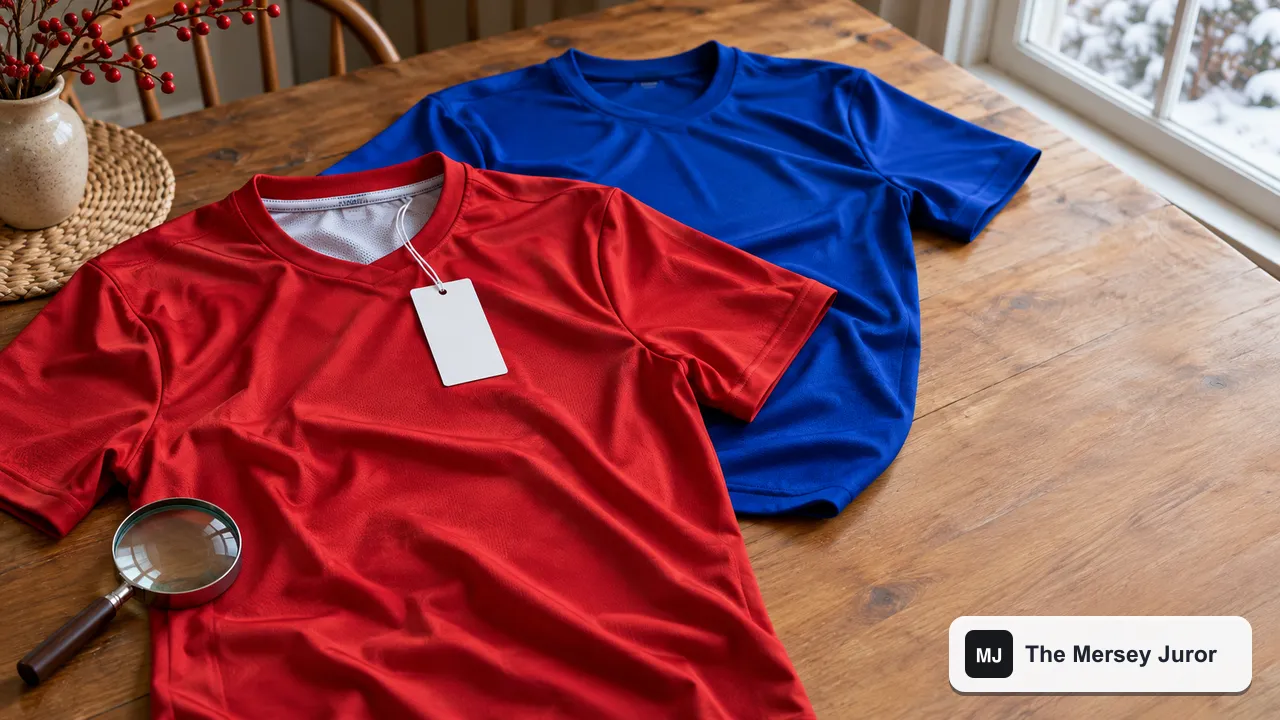
A replica Liverpool or Everton shirt is one of the most popular Christmas presents on Merseyside, and every year the cheap fakes arrive alongside the Black Friday deals. The quickest check is the price. Trading Standards says genuine current-season replica shirts typically sell for £60 to £120, so a “new” shirt offered well below that by an unfamiliar seller should set alarm bells ringing. Beyond price, the tags, the security codes and the seller tell you most of what you need to know.
Why fakes spike in the run-up to Christmas
Trading Standards issued warnings throughout 2026, most loudly before the summer’s World Cup. The Chartered Trading Standards Institute warned in June that demand for official shirts rises around big events and that counterfeits turn up on online marketplaces, social media and the high street. Staffordshire Trading Standards made the same point, adding that fakes are sold at car boot sales and markets and that counterfeiting is linked to organised crime.
The pressures are the same at Christmas. Lots of people are buying, many of them are buying for someone else, and most are short of time. That is exactly the market a counterfeiter wants.
Six checks before you pay
- Price. Compare with the club shop. A big discount on a current home shirt in November is unusual. Older shirts do get reduced, but sellers rarely discount the current season heavily before Christmas.
- The seller. Official club shops, league-endorsed stockists and recognised national retailers are the safe options. Social media adverts, unfamiliar websites and pop-up stalls outside grounds are not.
- The photographs. Listings using the club’s own promotional images instead of pictures of the actual item are a warning sign, as are stock photos with odd colours.
- The web address and contact details. A shop with no UK address, no phone number and a domain name made of club words strung together deserves suspicion.
- Payment. If a seller pushes you to pay by bank transfer instead of card or a recognised payment service, walk away. Card payments give you more protection if something goes wrong.
- Size and stock. Every size and every name and number available instantly, at a low price, is unusual for genuine stock.
When it arrives: checking the shirt itself
Some fakes are very good. The CTSI guidance lists the details that most often give them away:
- Hang tag and security label. The purchase order number on the hang tag should match the one on the shirt’s internal label. The security code should be unique to each shirt, so several shirts with the same code means fakes.
- Hologram. Genuine hang tags carry a proper hologram. Forgers do copy these, so it is a check, not a guarantee.
- Product code. Most genuine shirts have a product code you can use to verify authenticity with the manufacturer.
- Stitching and badges. Loose or uneven stitching, glue marks, rough embroidery and spelling mistakes are common in counterfeits.
- “Player only” patches. These often appear on fakes trying to look like the expensive player version.
- Colours and feel. Wrong shades of red or blue are a giveaway for anyone who has stood in a ground. Genuine shirts tend to feel light and breathable; fakes can be flimsy or oddly heavy.
Is it really a problem if it looks fine?
There are three good reasons to care. First, safety: genuine shirts go through checks that fakes skip, and the Anti-Counterfeiting Group has warned that fake shirts may contain harmful dyes or other substances. That matters more for a child’s shirt worn against the skin. Second, quality: counterfeits often fall apart after a few washes. Third, money: what you pay goes to people who are not paying tax and, according to Trading Standards, are often tied to wider crime.
There is also a quieter cost. Money spent on official kit goes back to the club rather than to a counterfeiter. Whatever you think about the price of replica shirts, and we have had our say on what supporters are asked to pay in Who Is the Premier League Actually For?, the answer is to take it up with the club, not to fund a fake.
What to do if you think you have been sold a fake
- Report it. In England and Wales, call the Citizens Advice consumer helpline on 0808 223 1133, which passes reports to Trading Standards. Staffordshire’s team also points people to the online Report It route.
- Contact your card provider if you paid by card and the seller will not refund you.
- Keep everything: the listing, messages, receipts and the packaging.
- Do not sell it on. Passing on a known fake is a problem in itself.
If you need help with a refund dispute, Citizens Advice can explain your rights; for anything more complicated, take advice from a consumer adviser rather than relying on general guides.
Buying it right: a short checklist
- Start at the club’s own shop, online or in person.
- If you shop elsewhere, stick to retailers you would happily complain to.
- Order printing (name and number) from the same official source as the shirt.
- Check delivery cut-off dates for Christmas before you leave it too late and are tempted by a dodgy last-minute seller.
- Keep the receipt with the gift, so exchanges for size are easy.
And if you are buying for a matchgoer, think about what they will actually wear in the stand in December. We have a separate guide to what you can take into Anfield and the Hill Dickinson, including the bag rules that catch out new supporters. A proper coat and a scarf might get more use than a third shirt, especially for a visitor following our matchday guide for visiting fans on a cold afternoon.